- Stories at this place
- 2
- Filed as
 History
Story 903
History of Kalaupapa
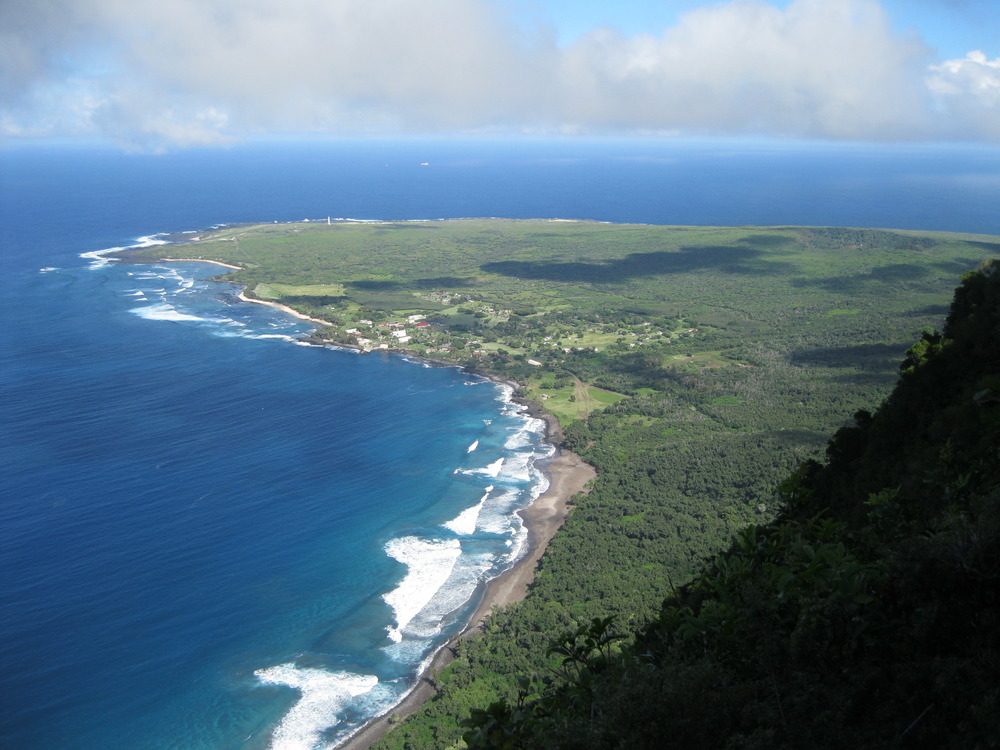
The sea cliffs of Molokaʻi rise like emerald ramparts, plunging nearly 3,000 feet straight down into the restless whitecaps of the Pacific. Cut off from the rest of the island by these towering vertical walls on one side and the vast, open ocean on the other, the flat green wedge of the Kalaupapa Peninsula juts out like a lonely world unto itself. To look down upon it from the mountain rim is to gaze upon a landscape wrapped in a profound, solemn silence—a place where history is etched deeply into the wind, the salt spray, and the stone.
Long before the world knew it as a place of exile, Kalaupapa was a fertile, cherished home. Native Hawaiians farmed its volcanic soil, fished its rich coastal waters, and gathered in a peaceful isolation shaped by nature. But in the 1860s, the Hawaiian Kingdom faced a devastating crisis. With the influx of foreign trade and global contact came diseases against which the native population had no natural immunity—chief among them Hansen’s disease, or leprosy.
Fearing an uncontrollable epidemic and driven by the medical ignorance of the era—which wildly exaggerated the contagion and viewed the disease with medieval dread—King Kamehameha V and the legislature passed the Act to Prevent the Spread of Leprosy in 1865. The law mandated the forced quarantine of anyone suspected of having the affliction.
The isolated Kalaupapa Peninsula, guarded by its impassable sea cliffs, was chosen as the site of banishment. Beginning in January 1866, the first boats arrived, unloading men, women, and children onto the rocky shore. They were given virtually nothing—no housing, no organized medical care, and barely enough food. Abandoned to the elements, the early years at Kalaupapa and the neighboring settlement of Kalawao were marked by despair, lawlessness, and survival of the harshest kind. It was widely viewed by the outside world as a living graveyard, a place where people were sent simply to die out of sight.
Yet out of this immense tragedy grew one of the most powerful testaments to human compassion in history.
In May 1873, a young Belgian missionary priest named Father Joseph Damien de Veuster—just 33 years old—volunteered to go to the settlement, knowing full well the risks. Believing that the exiles needed dignity above all else, Father Damien stepped off a cattle boat onto the shores of Kalaupapa and immediately set to work. He did not merely preach; he lived among them as an equal. He bandaged raw ulcers, built houses, dug graves, constructed a water system, and planted trees. He transformed a chaotic camp into a functioning, close-knit community called ʻohana (family).
For sixteen years, Father Damien poured his life into Kalaupapa. He smoked pipes with the residents, ate from the same bowls, and shared their daily sorrows and triumphs. In 1885, after years of tireless service, he spilled boiling water on his foot and felt no pain. The dreaded disease had finally claimed him. He continued his ministry as his body slowly succumbed, passing away on April 15, 1889, at the age of 49. Before him and alongside him came other devoted souls—including Saint Marianne Cope and her Franciscan sisters—who carried the torch of mercy deep into the 20th century.
The shadow of exile began to lift in the late 1940s when sulfone drugs were discovered, finally rendering Hansen’s disease curable and non-contagious. Quarantine laws were officially lifted in 1969, giving the remaining residents the absolute freedom to leave. Yet, remarkably, many chose to stay. Kalaupapa had become more than a colony; it had become their home, bound by a profound shared history that the outside world could never fully replicate.
Today, Kalaupapa stands as a National Historical Park—a quiet, sacred sanctuary wrapped in staggering natural beauty. The historic churches built by Father Damien still stand against the sea winds, and the echoes of resilience linger in the rustling palms. It remains a sanctuary of memory, honoring the spirits of those who were cast away, but who ultimately built a legacy of enduring love.