- Stories at this place
- 9
- Filed as
 History
Story 1275
The Clown Motel History
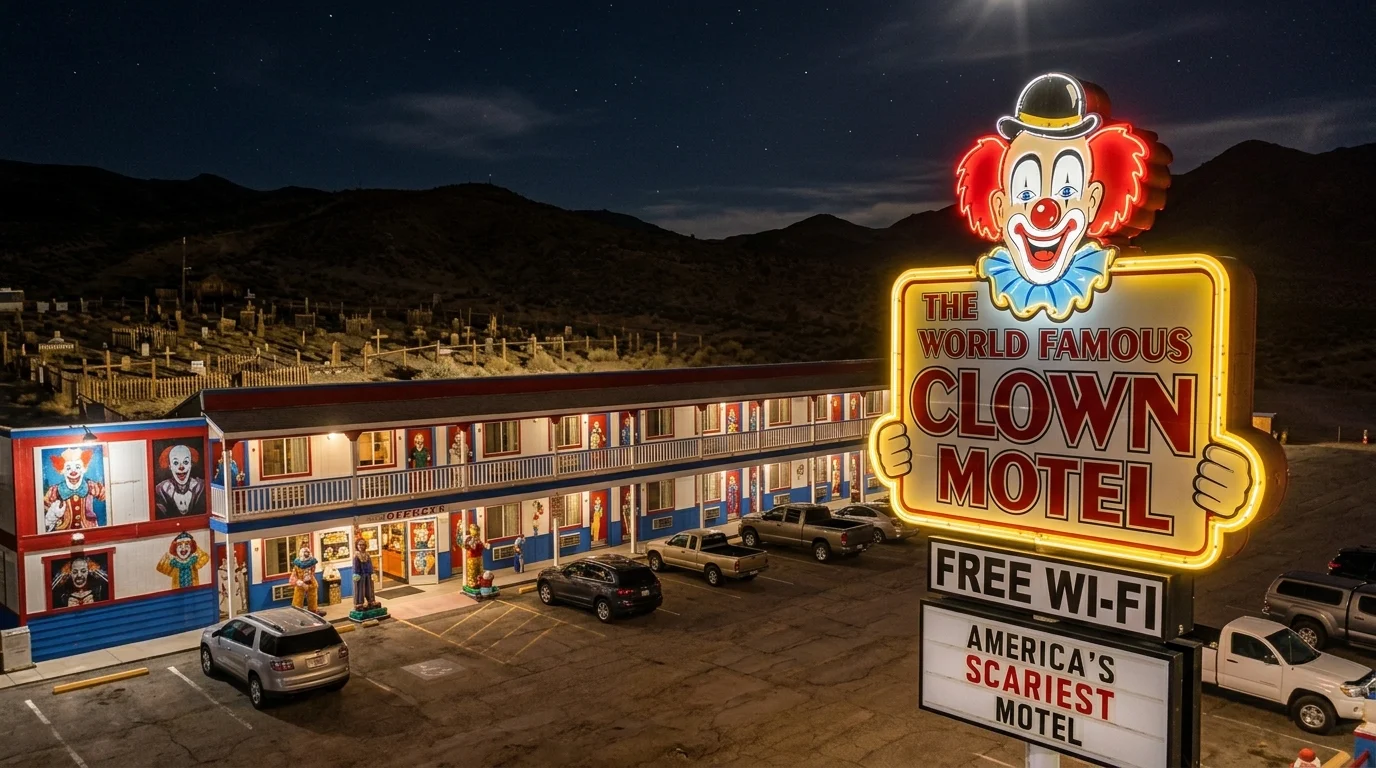
Halfway between the neon roar of Las Vegas and the mountain air of Reno, Highway 95 cuts through a lonely stretch of high-desert scrubland. Out of the dusk rises a glowing roadside marquee that looks like a fever dream: a grinning jester welcoming weary travelers to The World Famous Clown Motel. Step out of your car, and the desert wind carries a quiet chill. Just beyond the edge of the parking lot, separated from the motel rooms by nothing more than a low fence, sit three hundred weathered wooden crosses and leaning headstones.
To understand how a desert motel packed with thousands of painted faces became known as “America’s Scariest Motel”, you have to go back to the year 1900—long before a single clown figurine ever crossed the threshold.
Tonopah was born by accident. A prospector named Jim Butler, frustrated by a stubborn donkey that had wandered off in the night, picked up a rock to throw at the animal and stopped cold when he felt its unnatural weight. It was pure silver ore—the second-richest strike in Nevada history. Almost overnight, a boomtown erupted out of the dust. And where silver rushes go, tragedy follows.
In May of 1901, the town carved out the Old Tonopah Cemetery. It stayed open for barely a decade, yet in those ten brutal years, roughly three hundred souls were laid to rest in its rocky soil. Many were claimed by the mysterious Tonopah Plague, a virulent strain of pneumonia that swept through the unsanitary mining camps and killed victims within hours. Others died by violence, like Sheriff Thomas Logan, gunned down while trying to protect others in a local brothel.
The darkest chapter arrived on February 23, 1911, when a fire broke out 1,166 feet underground in the Belmont Mine. Thick, toxic smoke filled the shafts. A 28-year-old miner named William “Big Bill” Murphy volunteered to ride the cage down into the inferno. He brought up one load of choking men, then went down a second time. Exhausted and gasping, he told his coworkers, “Well boys, I’ve made two trips and I’m nearly all in, but I’ll try again.” On the third ascent, the cage broke the surface full of survivors—but Bill wasn’t in it. He had succumbed to the fumes and fallen into the shaft. Seventeen men died that day, and fourteen of them—including Big Bill, whose marker reads Died while saving others—were buried in the cemetery.
Decades passed. The silver faded, the town shrank, and the cemetery fell silent. Then came 1985.
Two siblings, Leona and Leroy David, decided to build a 31-room motel on the dusty lot right beside the graveyard. To outsiders, the theme they chose seemed bizarre, even macabre—but it began as a quiet act of devotion. Their beloved father, Clarence David, had died in a mine fire in 1942 and was buried just over the fence in the Old Tonopah Cemetery. In life, Clarence had cherished an eclectic hobby: collecting clowns. Wanting to keep their father’s memory alive and stay close to his resting place, Leona and Leroy filled the motel lobby with all 150 of his clown figurines.
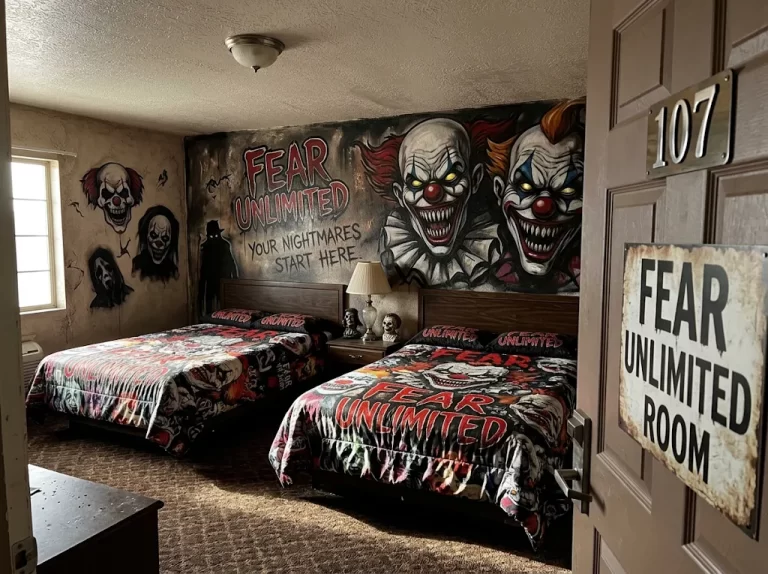
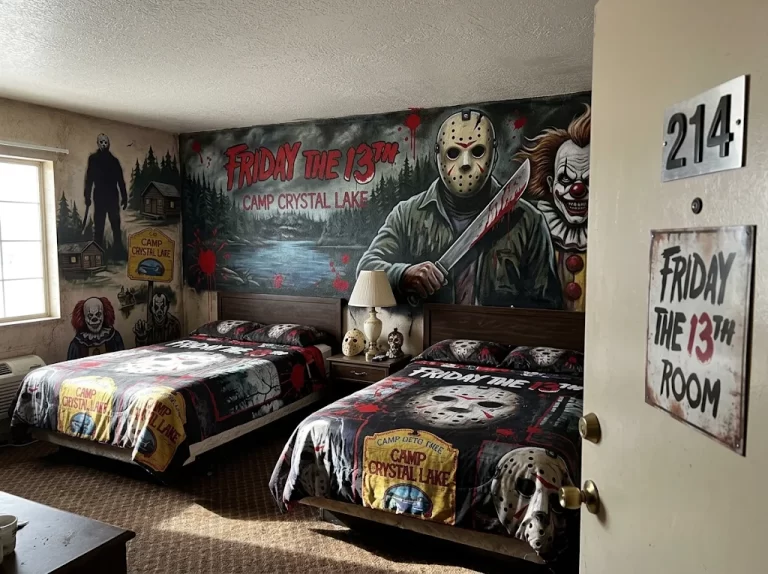
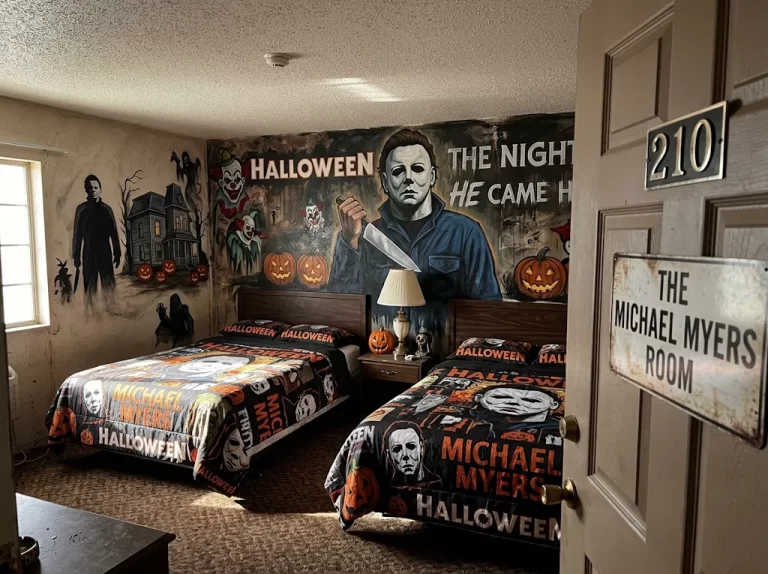
Word spread fast along the desert highway. In 1995, Bob and Deborah Perchetti bought the property and ran it for more than twenty years, welcoming curious road-trippers and paranormal investigators alike. When the television show Ghost Adventures filmed an episode there, the motel’s cult status exploded. Travelers from around the world began mailing in their own clown dolls, swelling the collection into the hundreds. In 2019, Vijay Mehar purchased the motel and tapped art director Hame Anand to run it. Together, they leaned fully into the legend—renovating the rooms with horror-movie themes like It, Halloween, and The Exorcist, and expanding the lobby museum to thousands of grinning, staring clowns.
What earned the Clown Motel its reputation as one of the most haunted places in America is the collision of three primal fears: isolation, the dead, and the uncanny.
Most of the ghost stories drift over the cemetery fence. Guests and paranormal crews routinely capture eerie EVPs—disembodied voices whispering in the desert night—and report seeing shadow figures lingering outside the motel doors. Many believe the restless spirits of the Belmont Mine Fire victims still wander the grounds. Others say they have spotted an older man standing quietly near the office or the fence line—Clarence David himself, keeping watch over the collection that grew from his modest 150 figurines into a towering museum.
Inside the rooms, the legends take on a life of their own. Guests in Room 108 have reported phantom phone calls from lines that never rang, while Room 111 is notorious for a dark shadow seen looming in the morning light. Room 210 carries a gentler, stranger tale: a man from Arizona suffering from years of debilitating back pain stopped for a single night, woke up miraculously relieved, and stayed for more than six years until he passed away in the room. And in the lobby, the clowns themselves are part of the folklore—most famously a figure named Charlie, whose hands appeared to move on their own on camera during the Ghost Adventures investigation.
Whether the motel is truly home to restless miners, lingering collectors, or living dolls—or simply the product of an overactive imagination staring into thousands of painted eyes at 2:00 AM—depends on who you ask. Former owner Bob Perchetti always offered a reassuring footnote to terrified guests checking in for the night: the ghosts of the Clown Motel might be watching, he said, but they are friendly, and nobody has ever been hurt.