- Stories at this place
- 1
- Filed as
 History
Story 1218
History of Hobbitville
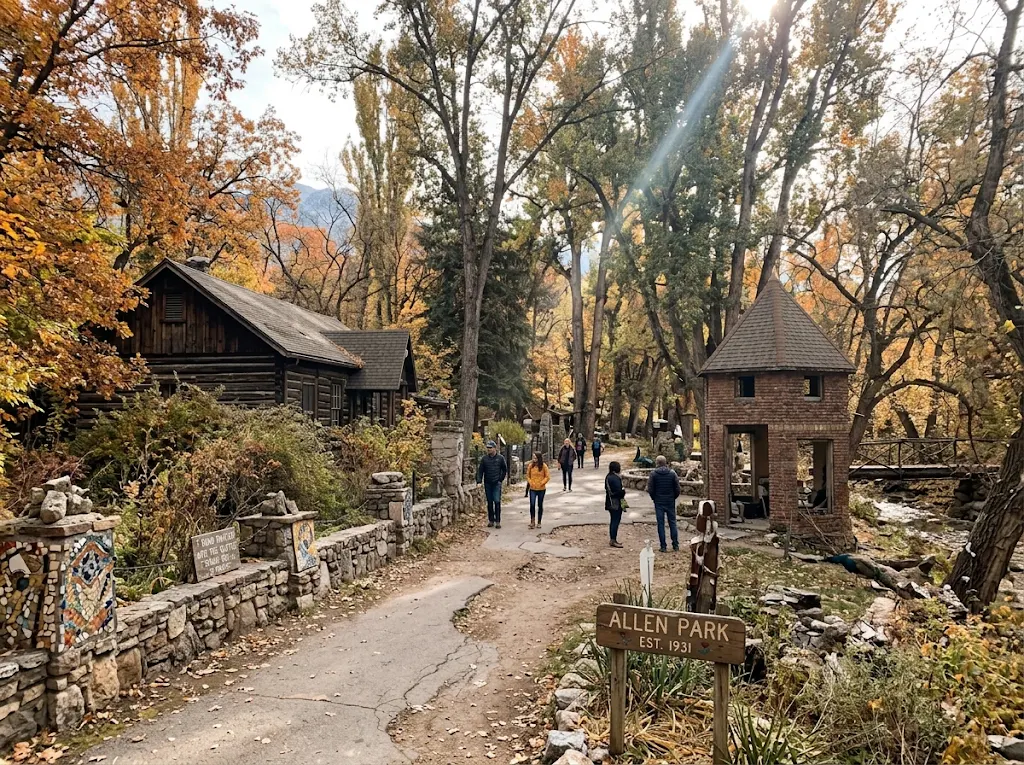
The streetlights along 1300 East in Salt Lake City’s Sugar House neighborhood buzz with an ordinary suburban hum, right across from the brick buildings of Westminster University. Yet if you step off the pavement where Emigration Creek slips beneath the road, the city vanishes. Tall trees close overhead, the air drops five degrees, and a narrow, shadowed lane winds into a pocket of woods that generations of Utahns have whispered about in the dark: Hobbitville.
Long before teenagers dared each other to creep past its gates at midnight, this eight-acre hollow had a different name and a very different heartbeat. In 1931, in the depths of the Great Depression, a generous local physician named Dr. George A. Allen and his wife, Ruth, bought the parcel—then little more than an abandoned weed patch and a deep canyon. They hauled in thousands of loads of dirt to fill the ravine, raised a Scandinavian log home, and poured their lives into building a nature lover’s sanctuary they called Allen Park.
Dr. Allen was a man of grand, eccentric passions. He helped found both the Hogle Zoo and the Tracy Aviary, and local lore still insists he once walked a tiger down Main Street just to drum up excitement for the zoo. On his own wooded estate, he kept more than 700 exotic birds and animals from around the world—peacocks, wild turkeys, reindeer, and even elephants and chimpanzees. Every Sunday, the Allens opened their gates to the public, turning the hollow into a living storybook. Even the occasional prisoner who escaped from the nearby Sugar House penitentiary would slip into the dense trees to hide, only to be marched right back out once Ruth caught them.
To keep the wildlife sanctuary afloat financially, Dr. Allen began building and relocating tiny cabins along the creek in the 1930s and 1940s—eventually managing around 30 rental units. Some were hammered together by local craftsmen in exchange for free medical care. The cottages were unusually small, even for the era, outfitted with compact, almost child-sized spaces and appliances. They drew a bohemian crowd of single artists, university professors, students, and, by the late 1960s, hippies who left the scent of sandalwood incense lingering in the pines. Around the grounds, stone monuments and colorful mosaics were carved into benches and light posts, bearing cryptic, poetic lines like “Underfoot the Divine Soil, Overhead the Sun”.
When Dr. Allen passed away in 1961, the Sunday crowds stopped coming. Over the decades that followed, the woods grew thicker, several cabins were boarded up and fell into disrepair, and an old swimming pool sat empty and cracked beneath the canopy. That was when the ghost stories—and the legend of Hobbitville—took root.
To a carload of curious teenagers creeping down the dark dead-end lane at night, Allen Park looked like a fever dream. The miniature houses, strange carved sayings, weathered statues, and eerie cries of peacocks echoing through the dark fueled rumors that the hollow was haunted—or worse, home to a secret, hostile colony of little people. What truly sealed its terrifying reputation, however, wasn’t ghosts at all. It was the living. Exhausted by decades of thrill-seekers trespassing after dark, pounding on cottage windows, and disturbing the quiet community, the protective family caretakers and residents began fiercely chasing intruders off the private drive. Startled trespassers fled back to Sugar House telling breathless tales of shadowy “ogres,” bearded guardians, and phantom cars with their headlights off tailing them through the neighborhood.
The mystery lingered until 2019, when the last of the tenants moved out and the estate went up for sale. Before developers could bulldoze the strange little village, Salt Lake City stepped in to purchase and preserve it. Today, the gates of Allen Park stand open from dawn to dusk. If you walk the quiet lane now, you won’t find ghosts or hobbits—only the hush of Emigration Creek, the faded poetry in the stonework, and a proud flock of peacocks still wandering Dr. Allen’s forgotten wonderland.