- Stories at this place
- 4
- Filed as
 History
Story 1215
The History of Pineview Reservoir Ogden, UT
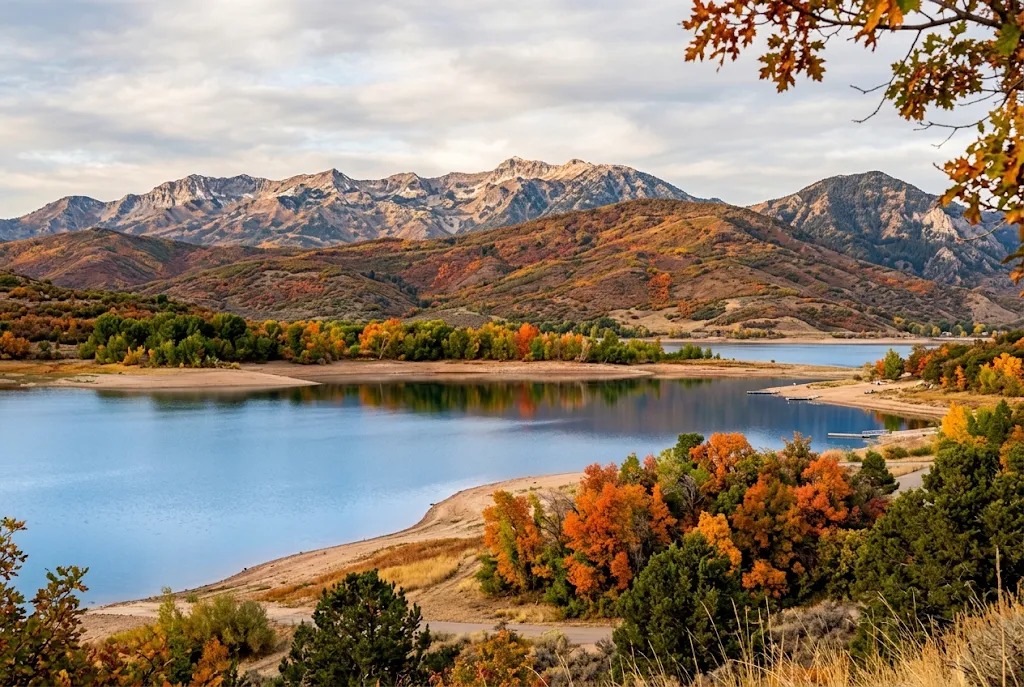
Before the boats, the marinas, and the summer crowds, the floor of Ogden Valley was a quiet expanse of farmland, cottonwoods, and natural springs. At its heart lay Artesian Park, a lush gathering place fed by underground wells so pure that the city of Ogden depended on them for drinking water. When the wind blew down from the Wasatch Mountains, it carried the scent of wet grass and pine across old wagon roads connecting the frontier towns of Huntsville, Eden, and Liberty.
The transformation began in the depths of the Great Depression. With Ogden growing and downstream water users clashing over shortages, federal planners under the National Recovery Act of 1933 set their sights on the narrow mouth of Ogden Canyon. On September 29, 1934, crews from the Utah Construction Company and Morrison-Knudsen broke ground on a $2.75 million project that would change the valley forever. At its peak, more than a thousand men labored in the canyon, blasting rock for a 5.5-mile water tunnel—Utah’s longest at the time—and raising a 103-foot earth-fill dam.
Yet Ogden refused to surrender its beloved artesian springs to the rising lake. Engineers devised a solution found nowhere else on Earth: they capped the wells directly on the valley floor and piped their pressurized water straight through the canyon, creating the only known culinary water system in the world with active artesian wells buried beneath a reservoir. When the dam was completed in June 1937, the gates closed, and the Ogden River slowly swallowed Artesian Park. Twenty years later, in 1957, the dam was raised to 137 feet, more than doubling the reservoir’s capacity to over 110,000 acre-feet and forcing the highways into Huntsville, Eden, and Liberty to be carved higher into the hillsides.
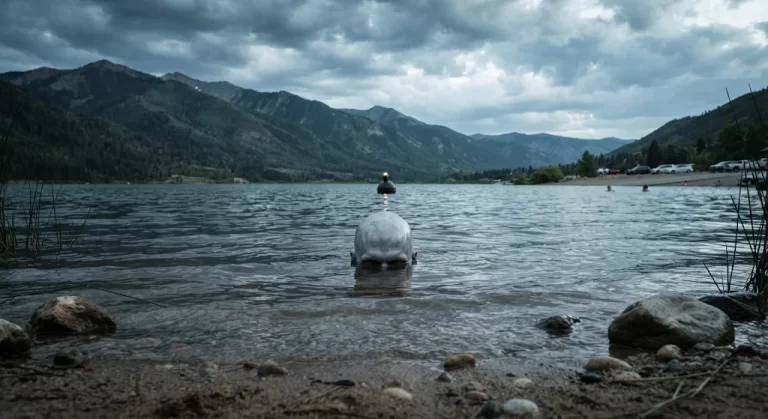
A drowned valley never truly disappears, and it was not long before folklore began to pool along Pineview’s shores. Locals who remember the old valley—and the generations who grew up swimming above it—speak of the reservoir as a place with a long memory. In the shadow of Ogden Canyon, ghost stories have circulated for decades, including grim local legends of families who fled up the canyon to escape a smallpox epidemic in Ogden, leaving behind restless spirits along the water’s edge. On still autumn nights, when fog rolls off the surface and swallows the shoreline, campers tell of hearing faint echoes where no boats are running—as if the drowned park and its old roads still stir beneath the dark water.
Every few decades, the folklore brushes uncomfortably close to reality. When water managers draw the reservoir down for major maintenance—most famously in the fall of 1992, and again during the infrastructure work of 2026—Pineview recedes and reveals what it has been keeping. Cracked silt gives way to the skeletal outlines of Artesian Park, remnants of forgotten roadways, and decades of submerged secrets: rusted vehicles, lost equipment, and relics that once vanished beneath the waves. In 1992, the receding water even forced Weber County deputies to revisit cold case files as long-hidden debris emerged from the mud.
Then, inevitably, the snowmelt returns. The water rises once more, smoothing over the scars of the old valley until Pineview looks again like a simple mountain mirror—hiding its capped springs, its sunken history, and its quiet legends beneath the surface.