- Stories at this place
- 1
- Filed as
 Haunted Places
Story 1345
Bally’s Hotel Smoke Ghost’s
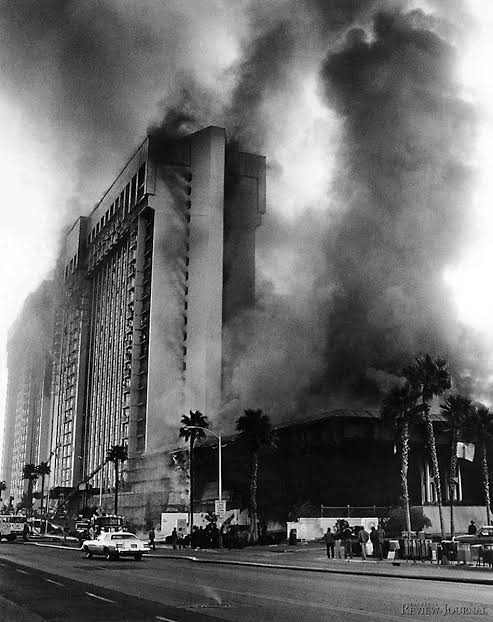
You can still smell the smoke in the drywall at the Horseshoe Las Vegas, even after they stripped the Bally’s sign off the front of the building and painted over the worst of the scars.
I booked a room on the upper floors thinking I was just getting a cheap mid-Strip stay with a decent view of the neon. I didn’t know I was checking into a mausoleum built on the most cursed intersection in Nevada—a corner that has cycled through five different properties to try and outrun its own past.
Before the glossy Horseshoe renovations and its decades-long run as Bally’s Las Vegas, this corner of Las Vegas Boulevard and Flamingo Road had already swallowed two earlier properties: the quiet Three Coins Motel in 1962, and Kirk Kerkorian’s short-lived Bonanza Hotel and Casino in 1967. After the Bonanza shuttered, Kerkorian tore it down to build something colossal in its place: the original MGM Grand Hotel and Casino, which opened in 1973 as the largest hotel in the world, dripping in Old Hollywood glamour and gold leaf.
Seven years later, that glamour burned to ash.
On the morning of November 21, 1980, an electrical ground fault sparked inside a wall behind a restaurant deli counter on the casino level, feeding quietly on plastic piping and unsealed shafts until a fireball tore through the gaming floor at seventy miles an hour. Eighty-five people died—most of them not burned, but suffocated in their beds, elevators, and stairwells as thick, toxic black smoke rushed upward through unsealed seismic joints and ventilation shafts into the 26-story high-rise tower. Afterward, the blackened shell was gutted, retrofitted, and sold to Bally Manufacturing, reopening in 1986 as Bally’s Las Vegas before eventually shedding that identity in late 2022 to become the Horseshoe—as if changing the marquee outside could finally trick the dead into leaving.
They didn’t leave. Ever since the tower reopened after the fire, housekeepers, security guards, and overnight guests have traded the same quiet warnings about the North Tower, where the smoke had hung thickest. The folklore says the building holds onto the panic of those final minutes—phantom fire alarms ringing in empty hallways, disembodied coughing echoing through the stairwells, and the sudden, suffocating stench of charred plastic filling rooms where nothing is burning.
By midnight on my first night, the air conditioning in my room started blowing cold, stale air that smelled faintly of scorched wire and wet ash.
I turned the thermostat off completely, yet the draft kept spilling from the ceiling vents, carrying a low, rhythmic wheezing that sounded uncomfortably like someone trying to draw breath through a blocked throat. Outside in the hallway, the heavy fire doors at the end of the corridor clicked open on their own, swung back against the wall, and latched shut again—over and over, every few minutes, though the security camera dome above the elevator bank stayed dark and unblinking.
Around two in the morning, I stepped out into the corridor to get ice, hoping the fluorescent lights would steady my nerves. Halfway down the hall, the temperature dropped so sharply my breath misted in front of my face. Standing near the stairwell exit was a woman in a dated, pastel-pink 1980s tracksuit, her bare feet pressing into the patterned carpet—one of the recurring apparitions Strip regulars call the Smoke Ghosts, the souls still searching for unlocked roof doors that were bolted shut on the morning of the fire. She wasn’t looking at the exit sign; she was staring up at the ceiling vents with her hands pressed flat over her mouth and nose, her eyes wide with a terror as fresh as that November morning.
Before I could speak, the overhead lights flickered once, and the air filled with the acrid reek of burning insulation. When the fluorescents buzzed back to full brightness, the corridor was empty—save for a faint, damp smear of soot on the metal push-bar of the stairwell door.
I bolted back into my room, threw the deadbolt, and sat awake until dawn with my suitcase packed beside the bed, listening to footsteps sprinting past my door in the empty hall and knuckles drumming frantically against the adjoining wall—the desperate, muffled knocking of people still trying to break through drywall into air that wasn’t there.