- Stories at this place
- 1
- Filed as
 Vampire
Story 228
The Lafayette Vampire
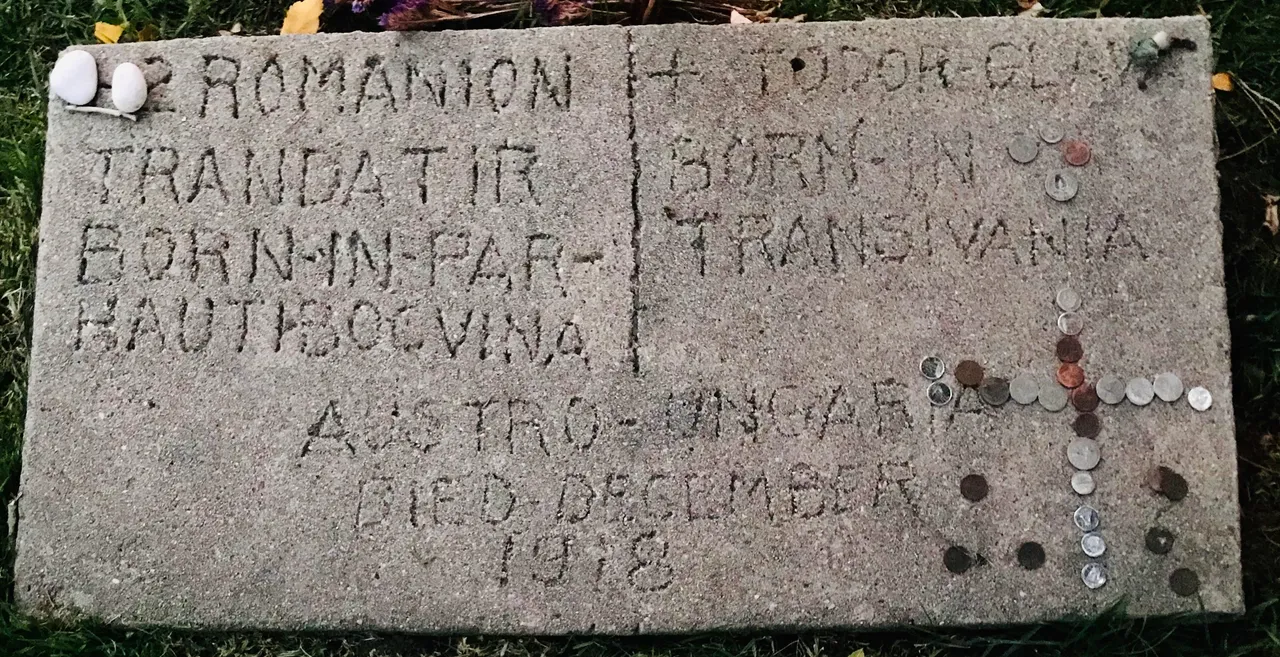
In the north-central edge of the municipal cemetery in Lafayette, Colorado, lies a weathered, hand-poured concrete slab tucked beside a gnarled juniper tree. Scratched into the cement—with a couple of spelling errors—is an inscription that has fueled one of Colorado’s most enduring supernatural legends for over a century: “Todor Glava, Born in Transylvania, Died December 1918.”
The Legend of the Lafayette Vampire
For generations, local teenagers and ghost hunters have dared one another to visit the Lafayette Cemetery under a full moon. According to the local folklore, Teodor (often misread from the rough concrete etching as “Fodor” or “Todor”) was a tall, gaunt, pale recluse who avoided the sunlight. When he suddenly died in 1918 and townsfolk discovered he hailed from Transylvania—made infamous two decades earlier by Bram Stoker’s Dracula—panic swept through the coal-mining town.
As the story goes, superstitious locals exhumed his body only to find blood on his lips, elongated teeth, and fingernails that had continued to grow. Terrified that an undead monster was walking among them, they drove a wooden stake through his heart and reburied him. Lore insists that the crooked juniper tree growing out of his plot sprouted directly from that wooden stake to pin him to the earth, while wild rose bushes that once tangled over the dirt grew from his monstrous fingernails
Today, visitors still treat the plot like a shrine, leaving behind coins, room keys, plastic jewelry, flowers, and even toy vampires.
The True History Behind the Grave
When local historian Doug Conarroe dug into Colorado state archives, draft cards, and town receipts, he uncovered a story far more human—and tragic—than any gothic horror novel.
An Ordinary Working Man: Teodor Glava was not a pale, towering aristocrat. Born in 1877 in the Transylvania region of what was then Austria-Hungary, he was a married man of average height and medium build with brown eyes and black hair. Like thousands of Eastern European immigrants, he came to Colorado to work in the coal mines, taking a job at Lafayette’s Simpson Mine while living in a nearby mining camp called Canfield.
A Sudden Pandemic Death: Glava lived a quiet, modest life, renting a room for $1.12 a day and saving his wages to support his wife, Sophia, and daughter, Victoria, back home. A company store receipt from November 27, 1918, shows his final purchases: nuts, cigars, and Wurzburger “near-beer” (a low-alcohol brew sold during Prohibition). Six days later, on December 3, 1918, Glava was dead—not from a curse, but as one of millions claimed by the 1918 Spanish Flu pandemic
The Shared Headstone: Estate invoices prove Glava was properly embalmed by a local undertaker and buried on December 6, 1918. Though he had roughly $2,000 in savings and war bonds (nearly $40,000 today), he had no relatives in the United States to arrange a formal monument. Two days after Glava’s burial, a fellow Romanian miner from the Simpson Mine named John Trandafir also died of the flu and was buried right next to him. A friend of Trandafir’s poured a single, homemade concrete marker bridging the two graves, scratching both men’s names into the wet cement—with far more detail for his friend John than for Teodor.
Folklore vs. Fact
| The Urban Legend | The Historical Reality |
| The “Vampire” Appearance: Pale, gaunt, and nocturnal. | Coal Miner’s Life: Worked underground shifts and had an average, sturdy build. |
| Exhumed & Staked: Dug up with blood on his mouth and staked through the heart. | Embalmed Flu Victim: Died of the 1918 influenza and was formally embalmed before burial. |
| The Stake Tree: A juniper grew from the wooden stake in his chest. | Wrong Placement: The tree grows two feet east of his feet—nowhere near his heart. |
| Fingernail Roses: Blood-red roses sprouted from his claws. | A Friend’s Tribute: The bushes actually bloomed yellow roses—likely planted for John Trandafir (whose Romanian surname literally translates to “rose”). |
Ultimately, the tale of the Lafayette Vampire grew out of early 20th-century xenophobia and labor tensions. Non-union immigrant miners from Eastern Europe were already viewed with suspicion by many locals, and the single word “Transylvania” etched in concrete was all the fuel townspeople needed to turn a hardworking immigrant father into a neighborhood monster