- Stories at this place
- 9
- Filed as
 Hotel
Story 1130
Room 208 – Golden Ager
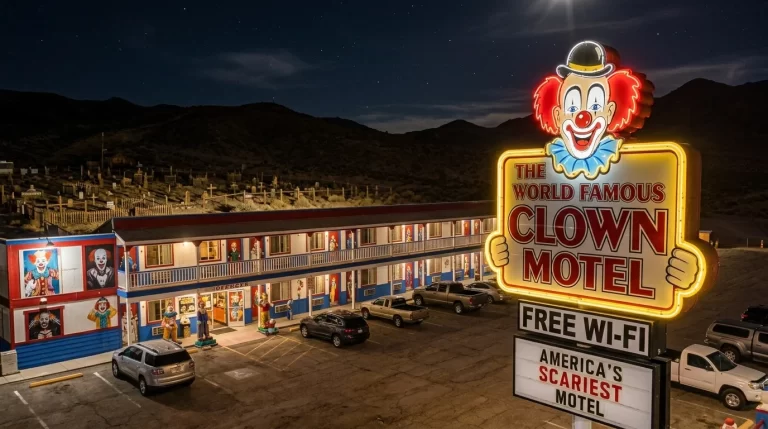
The wind howling off the Nevada desert carries a dry, metallic chill as it sweeps across the high desert flats of Tonopah. Halfway between Las Vegas and Reno, this former silver-mining camp is a town carved out of raw stone, haunted memory, and stubborn survival. Right on Main Street sits America’s scariest motel, sharing a chain-link fence with the historic Old Miners Cemetery where victims of the 1905 plague and the devastating 1911 Belmont Mine fire are laid to rest.
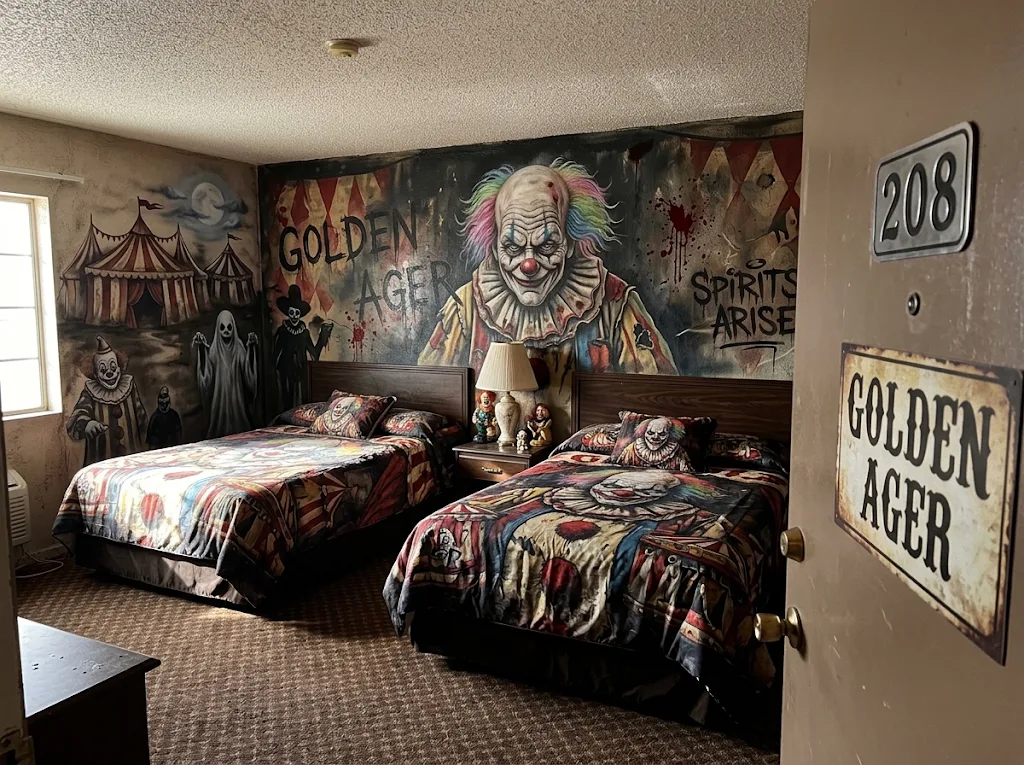
While the property is globally famous for housing thousands of smiling, staring ceramic and porcelain clowns, stepping up to the second floor and sliding a key into Room 208—known as the “Golden Eager” (or Golden Ager) room—takes you into a unique corner of the motel’s cinematic and eerie history.
History and Background of Room 208
The Clown Motel itself was originally built in 1985 by siblings Leona and Leroy David to honor their late father, Clarence David, a local businessman who left behind a massive collection of over 150 clown figurines. Over the decades, the motel changed hands and evolved into a mecca for horror enthusiasts, paranormal investigators, and pop-culture junkies.
As the motel grew in fame—expanding its collection to thousands of pieces of clown memorabilia and introducing special movie-themed rooms—Room 208 was designated to honor the indie horror film Clown Motel: Spirits Arise, cementing the location’s intersection with modern cinematic folklore. It stands as a tribute to the strange legacy of terror and camp that defines the desert landmark.
Shadows in the Golden Eager Room
The door to Room 208 clicks open with a heavy, hollow thud. Inside, the air is thick with the distinct stillness of a desert room holding centuries of dust and whispered secrets just beyond the glass.
Unlike the standard rooms, Room 208 carries the distinct, vibrant dread of the silver screen. The walls lean into the cinematic aesthetic of the horror project that inspired it, bathed in an eerie glow from the neon signs blinking outside on the highway. Ceramic eyes peer down from shelves, their painted smiles catching the amber light of the bedside lamps.
When you peer out the window of Room 208, your gaze is immediately drawn downward into the gloom of the Old Tonopah Cemetery. In the pitch-black stillness of midnight, when the tourist foot traffic fades and the highway hums its lonely song, the wooden grave markers seem to shift in the moonlight. Inside the room, the floorboards occasionally groan under unseen weight—a reminder that in Tonopah, you never truly stay alone.