- Stories at this place
- 2
- Filed as
 History
Story 982
Bran Castle
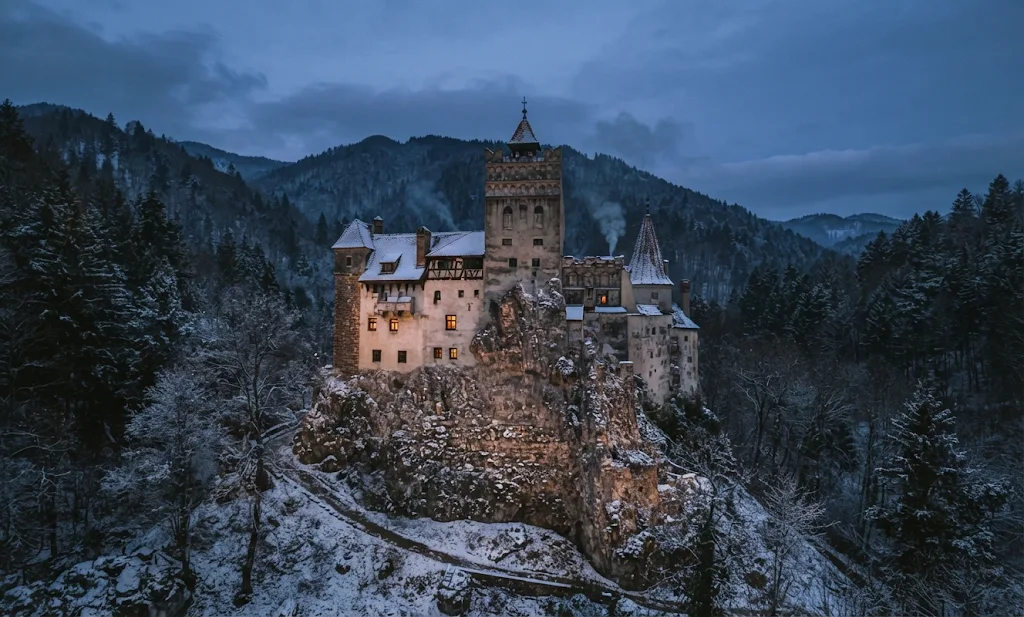
Perched dramatically on a jagged 200-foot rock cliff overlooking the mountain pass between Transylvania and Wallachia, Bran Castle looks custom-built for nightmares. With its labyrinth of dark wooden stairs, medieval towers, and mist-shrouded ramparts, it is globally celebrated as “Dracula’s Castle.”
Yet, the true history of Bran Castle and how it became tied to the most famous vampire in literature is a fascinating blend of medieval strategy, dark folklore, and clever marketing.
The History and Background of Bran Castle
The origins of Bran Castle date back to the late 14th century. In 1377, King Louis I of Hungary granted the Saxon settlers of Brașov permission to build a strategic stone fortress at their own expense and labor. Completed around 1388, the castle served a vital dual purpose:
- Military Defense: It guarded a crucial mountain pass against Ottoman expansion.
- Economic Control: Positioned at a major border crossing, it operated as a customs house, collecting taxes from merchants traveling between Transylvania and Wallachia.
For centuries, the castle changed hands between Hungarian kings, Transylvanian princes, and local Saxons. In 1920, the people of Brașov gifted Bran Castle to Queen Marie of Romania, who fell in love with its romantic, rugged architecture. She transformed the austere military fortress into a magnificent royal summer residence, adding secret staircases, cozy nooks, and a surrounding English-inspired park.
Why is it Known as “Dracula’s Castle”?
Despite its spooky reputation, Vlad the Impaler (the 15th-century Wallachian ruler who inspired the Dracula legend) never actually lived at Bran Castle. Historical records suggest he may have briefly passed through the area or been held prisoner nearby for a short time, but he had no permanent connection to the fortress.
The connection to the Count is entirely rooted in fiction and imagery:
- Bram Stoker’s Vision: Irish author Bram Stoker wrote his landmark 1897 Gothic horror novel Dracula without ever visiting Romania. When describing the fictional vampire’s cliffside castle in the Carpathian Mountains, Stoker relied on descriptions and illustrations available in 19th-century British libraries—and the fortress he pictured bore an uncanny resemblance to Bran Castle.
- The Tourist Legend: In the latter half of the 20th century, international travelers seeking the physical footprint of Stoker’s novel gravitated toward Bran because it matched the literary description. Recognizing its atmospheric appeal and global fascination, tourism branding eventually embraced the moniker “Dracula’s Castle.”
A Tale of the Mist
Long before the fictional count or modern tourists arrived, the valleys surrounding the castle held older, darker stories. Local Romanian folklore warned of the strigoi—troubled spirits or living vampires that would rise from their graves at midnight to haunt the living.
Locals whispered that on moonless nights when the mountain fog rolled thick up the gorge, the stones of Bran Castle remembered every soul that had passed through their gates. They said the shadow pacing the highest stone turret wasn’t just the wind, but a lingering sentinel keeping watch over a border that the dead could never quite cross.
The video below offers a cinematic look at the misty, dramatic landscapes and historic architecture surrounding Transylvania’s most famous fortresses.