- Stories at this place
- 2
- Filed as
 Bigfoot
Story 1189
The Legend Of Bigfoot
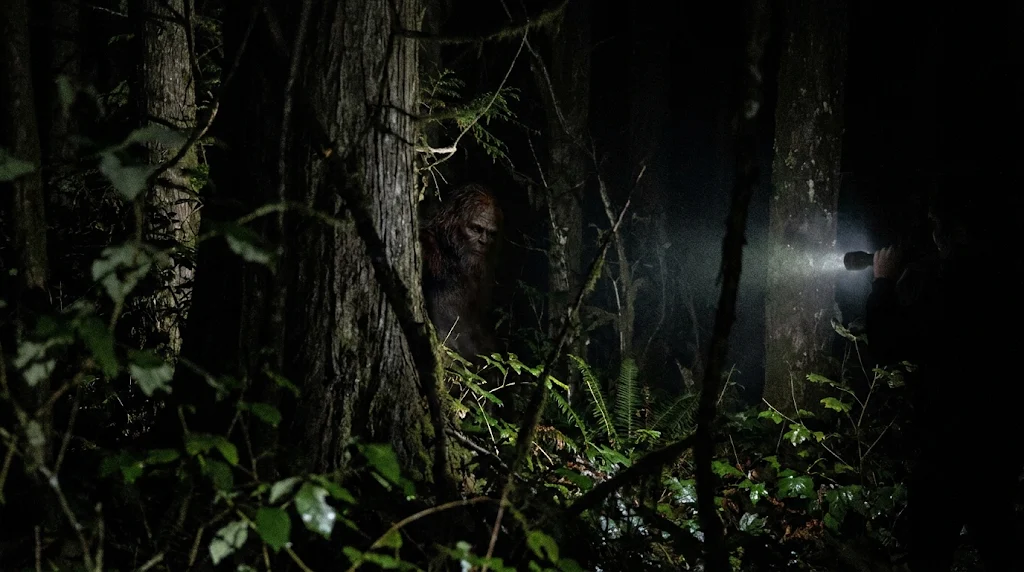
The legend of Bigfoot is not a single myth, but a cultural hybrid—born from centuries-old Indigenous oral traditions, shaped by 19th-century European “Wild Man” folklore, and cemented into modern pop culture by a 1958 newspaper headline and a 59.5-second reel of 16mm film.
No single artifact did more to define what the world pictures when it hears “Bigfoot” than the 1967 Patterson-Gimlin footage. Yet the creature’s roots stretch back long before cameras ever entered the Pacific Northwest.
The Background: Where the Folklore Started
Bigfoot’s origins sit at the intersection of two distinct cultural streams that collided in the Pacific Northwest:
- Indigenous Oral Traditions: Long before European settlers arrived, dozens of Indigenous nations across North America told stories of large, hairy, human-like beings living in the deep forests. To the Sts’ailes people (a Coast Salish nation in British Columbia), this being is Sasq’ets—a spiritual, shape-shifting caretaker of the woods and a respected bridge between the human and natural worlds. Other tribes have their own distinct traditions, such as the Dzunukwa (Kwakwaka’wakw), the Omah (Yurok and Hupa), and the Sabe (Ojibwe). Crucially, these were rarely “monsters” in the modern horror sense; they were often teachers, guardians of the land, or cautionary figures.
- The European “Wild Man” Archetype: When European settlers and loggers pushed into the dense, uncharted forests of the American West in the 1800s, they brought their own centuries-old folklore of the Woodwose (the hairy Wild Man of the woods). Frontier newspapers frequently ran sensational “wild man” sightings, blending settler anxieties about the untamed wilderness with distorted, secondhand versions of Indigenous stories.
How the Modern Legend Took Shape
While the folklore is ancient, “Bigfoot” as a pop-culture phenomenon was built in a remarkably short window during the 20th century—with much of the modern mythos anchored around Willow Creek, California, a small Humboldt County town widely known as the “Bigfoot Capital of the World.”
- Pre-1800s — Indigenous Oral Histories: Tribes across the Pacific Northwest and beyond pass down stories of Sasq’ets and other forest beings as spiritual guardians, tricksters, or symbols of respect for the wilderness.
- 1920s — The Name “Sasquatch” Is Coined: J.W. Burns, a Canadian journalist and teacher on the Chehalis Indian Reserve in British Columbia, collects local Indigenous stories and anglicizes Sasq’ets into Sasquatch in a series of newspaper articles, introducing the name to the broader public.
- 1958 — Bluff Creek, Willow Creek, and “Bigfoot”: Bulldozer operator Jerry Crew discovers massive 16-inch human-like footprints at a remote logging site in Bluff Creek, just north of Willow Creek, California, and makes plaster casts. The Humboldt Times runs a front-page story dubbing the track-maker “Bigfoot,” putting the Willow Creek area on the map as the epicenter of the phenomenon. (Decades later, the family of Ray Wallace, the logging company’s owner, revealed he had carved wooden feet as a prank—though believers argue he didn’t invent the legend itself.)
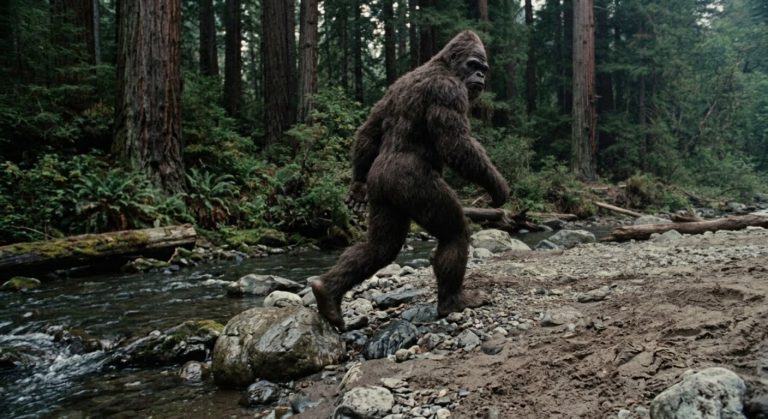
- 1967 — The Patterson-Gimlin Film: Roger Patterson and Bob Gimlin capture 59.5 seconds of 16mm footage in the same Bluff Creek wilderness near Willow Creek, showing a tall, dark, bipedal figure striding across a sandbar. Despite decades of debate over whether it is a man in an ape suit or an undiscovered primate, the film locks in the iconic silhouette of Bigfoot.
- 1970s–Present — Pop Culture and Cryptozoology Boom: Documentaries like In Search of…, the 1972 cult film The Legend of Boggy Creek, and later reality TV shows transform Bigfoot from a regional campfire tale into a global cryptid, tourism mascot, and symbol of the Pacific Northwest.
Why We Still Tell the Story
Although satellite mapping, trail cameras, and DNA analysis have failed to produce verified physical proof, Bigfoot remains more popular than ever. Folklorists and psychologists point to a few enduring reasons why the story refuses to die:
- A Refuge for Mystery: In a world where every square mile of Earth can be viewed on a smartphone, Bigfoot represents the comforting idea that the map isn’t finished yet—that the wilderness is still vast, wild, and capable of keeping secrets.
- The Uncanny Mirror: Bigfoot sits right on the boundary between human and animal. Just like stories of Neanderthals or “missing links,” it taps into a deep evolutionary curiosity about what we used to be and what it would feel like to meet a wilder cousin in the dark.
- Environmental Anxiety: Bigfoot sightings surged in the late 1950s and 1970s—precisely when industrial logging, highway construction, and suburban sprawl were rapidly shrinking old-growth forests. In many ways, Bigfoot acts as a silent witness to human encroachment, a symbol of nature pushing back or retreating from civilization.
- Community and Play: Unlike darker urban legends, Bigfoot has evolved into a largely benign, almost affectionate myth. From the towering roadside statues and Bigfoot museum in Willow Creek to annual festivals and weekend “squatching” expeditions, the story gives people a shared excuse to get outside, trade campfire tales, and enjoy a little wonder.