- Stories at this place
- 1
- Filed as
 Cryptid
Story 1293
Legend of the Bear Lake Monster
Gather ’round the fire, folks, and throw another log on before the chill from the water creeps up to our boots. You see that big, dark stretch of Bear Lake out there? Looks peaceful enough under the stars, doesn’t it? Well, if it weren’t for a fella named Joseph Rich, a bottle of ink, and a whole lot of frontier desperation, none of us would even be camping here tonight.
Picture this: July of 1868. The summer sun was beating down hard on the sagebrush flats of Rich County, and poor Joseph was sweating straight through his wool waistcoat. The mood in the Bear Lake Valley back then was about as dry and brittle as the grass under your sleeping pad. Folks were packing their wagons and bailing out.
Can’t say I blame ’em, honestly. When you’re dealing with punishing short summers, biting autumn freezes, and winter snowstorms that bury a cabin to the chimney, pioneering loses its charm real quick. Families who’d come north to tame this high-altitude frontier were turning tail and heading south. Paris and Garden City were emptying out fast. Unless a genuine miracle put Bear Lake on the map—something to spark curiosity, get tongues wagging, and bring in some visitors—the whole valley was headed for ghost-town status.
So there’s Joseph, sitting on the porch of the local outpost, chewing on a stalk of grass, racking his brain for a miracle. And that’s when the lightbulb went off.
He pulled a blank notepad from his satchel, dipped his pen into the inkwell, and cracked a grin. If the dirt couldn’t draw a crowd, the water sure as heck would.
Two days later, columns of text rolled off the printing presses and headed south to the Deseret News in Salt Lake City. Now, Joseph didn’t just report the news; he spun a yarn with enough breathless flair to make a dime novelist jealous. He didn’t write about a big trout—he conjured a full-blown leviathan.
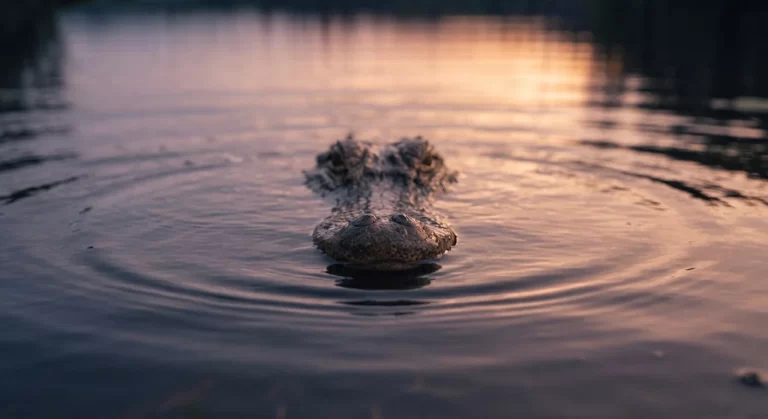
“A monster of the deep!” his dispatches hollered. He made up eyewitnesses—totally fictional neighbors—who swore up and down they’d seen a beast forty to fifty feet long slicing through the turquoise waves. According to Joseph, it had a head like an alligator, scales gleaming like polished brass, and swam faster than a spooked antelope.
At first, Joseph figured folks would have a good chuckle, shake their heads, and tip their hats to a clever tall tale. He underestimated the frontier, though. When people live out in wide-open, empty spaces like this, they want to believe there’s a little magic lurking around the bend. Within a few weeks, the entire territory had caught a raging case of monster fever.
By August, that little hoax had grown legs—or flippers, I suppose. Word of the lake serpent made it all the way to Church leadership in Salt Lake City, right to the ears of President Brigham Young himself.
When Brigham Young and his party rode into the valley to check on the settlements, they didn’t laugh it off. Too many honest teamsters and farmers had stepped forward, swearing on their Bibles that they’d seen wakes moving dead against the wind. During a town meeting up in Paris, Brigham Young looked out over the crowd, stroked his beard, and decided if there was a beast out there, it needed handling.
“If this creature is interfering with our people,” the Prophet announced with a wry glint in his eye, “we ought to catch it.”
Sure enough, a few days later, a massive freight wagon rumbled into town hauling a coil of heavy, industrial-strength hemp rope shipped all the way from Salt Lake. The locals stood around gawking at that thick cable. Overnight, the talk shifted from terror to pure entrepreneurship. Ambitious merchants started whispering about P.T. Barnum. Just imagine hauling a fifty-foot serpent onto a flatbed railcar and touring it across the country—charging fifty cents a head just to stare into its amber eyes!
Meanwhile, Joseph Rich was standing on the sidelines watching them unload that giant rope, his eyes wide as dinner plates. Good heavens, he must’ve been thinking, they actually bought it.
That very night, a crew of determined men loaded up that heavy rope, a few lanterns, and a whole barrel of salted pork for bait, and rowed a pair of flat-bottomed wooden boats out onto the glassy water. Joseph tagged along, clutching his notebook, feeling like a wizard who’d accidentally summoned a demon he couldn’t put back in the bottle.
The moon was just a sharp silver sliver, throwing long shadows off the Wasatch peaks. The water was pitch black and freezing cold—just like it gets out there past midnight.
“Hold steady,” whispered Silas, a grizzled local trapper gripping the end of that heavy cable like a whaler with a harpoon. “If that thing surfaces, we loop this right around its snout.”
Joseph swallowed hard, peering into the dark. The lake was dead quiet, except for the lap-lap of water against the wooden hulls. For one wild, terrifying second, Joseph’s own imagination turned on him. He swore he saw a dark shadow glide right beneath the boat. He caught a whiff of pine and deep, cold water. Gripping the edge of the boat with white knuckles, he felt his heart hammering against his ribs. What if, he wondered, I accidentally made something real?
They sat out there for hours, shivering in the mountain chill, holding their breath every single time a fish broke the surface.
Nothing came. No brass scales scraped the wood. No amber eyes blinked back from the dark. When dawn finally bled a pale pink over the ridges, the men hung their heads in exhaustion. The pork was untouched. The rope was bone dry.
Years later, long after the panic died down and the valley had blossomed into the thriving, stubborn community of farmers and campers we know today, an aging Joseph C. Rich finally came clean. He confessed the whole thing was a “wonderful first-class lie,” cooked up out of pure desperation to save a dying town.
He braced himself for folks to be furious. Instead, they busted out laughing.
Because Joseph’s tall tale did what a thousand plows never could: it put Bear Lake on the map. It gave this valley an identity, a soul, and a secret splash of magic tucked right beneath those turquoise waves.
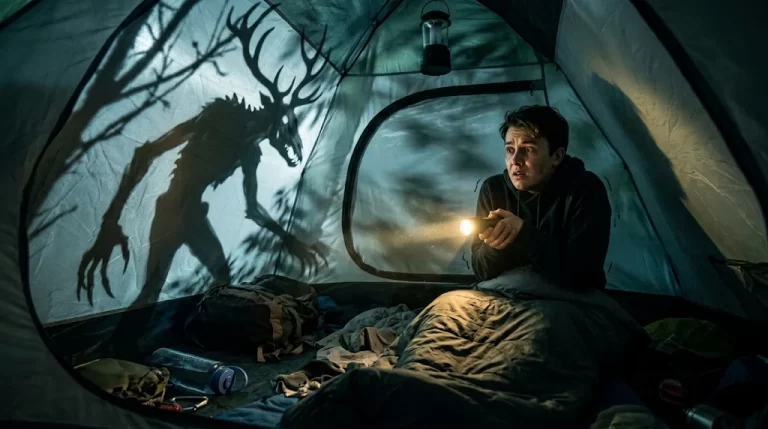
So, when you’re zipping up your tent tonight and you hear a sudden splash out in the dark, don’t sweat it. The rope is long gone, and Joseph’s resting in his grave—but the monster? Well, the monster’s still out there. Just proof that sometimes, the best stories are the ones we tell around a campfire to keep the dark a little more interesting.