- Stories at this place
- 4
- Filed as
 Mainland Folklore
Story 1237
The Phantom Music of McCune Mansion
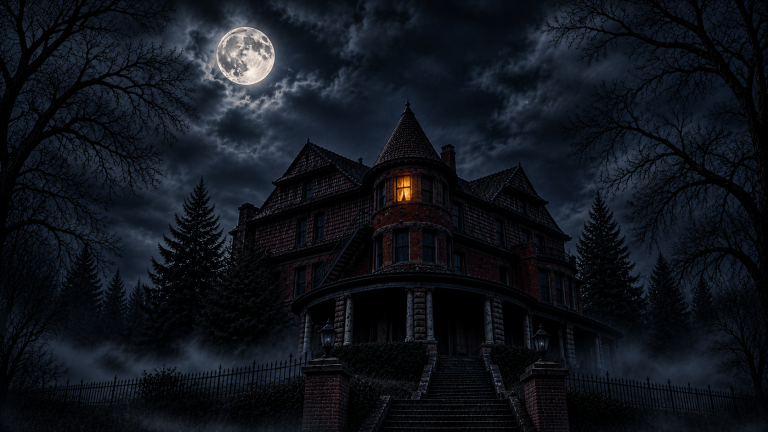
The last catering van had pulled away from Capitol Hill, its taillights dissolving into the Salt Lake City fog, leaving McCune Mansion wrapped in a heavy midnight quiet.
Mallory stood near the base of the grand staircase, clicking off the chandelier switches one by one. Above her, twenty-one rooms of African mahogany, Russian oak, and silk-draped walls settled into darkness. She had worked late shifts at the 1901 estate for nearly a year, and she knew the house’s usual night noises—the groan of old timber, the hiss of radiators, the wind catching the red-tile roof.
Then, from somewhere on the third floor, a piano note rang out.
It wasn’t a dull thud or a settling pipe. It was a clean, deliberate chord, followed by a slow, climbing arpeggio that drifted down the stairwell like cold air. A beat later, a violin joined in—thin, aching, and unmistakably live.
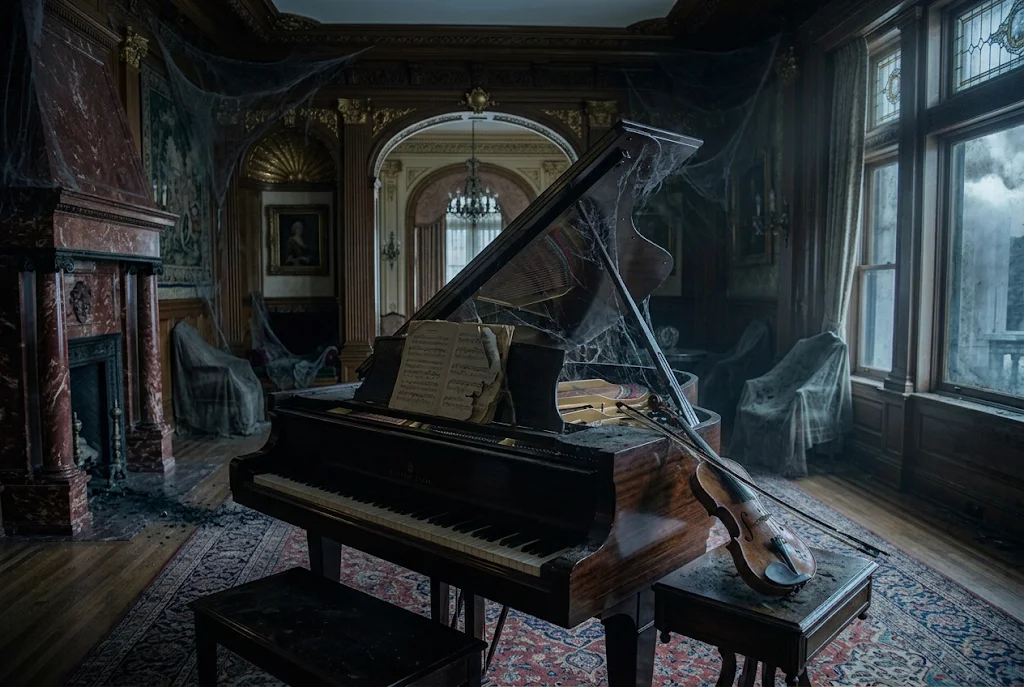
Mallory froze, her hand still on the brass switch plate. The mansion’s grand piano sat locked in the main parlor just behind her. She turned slowly to look through the archway. The polished lid was bolted shut, its bench empty in the streetlight filtering through the tall windows.
“Leave it be,” a raspy voice said from the shadows near the pantry.
Mallory flinched, spinning around to see Vern, the mansion’s longtime night caretaker, leaning against the doorframe with a thermos in one hand and a heavy ring of keys in the other. He didn’t look startled. He looked like a man listening to the rain.
“Someone’s still upstairs,” Mallory whispered, her pulse thudding in her throat. “One of the wedding guests must have—”
“House is empty, Mallory. I locked the upper landings twenty minutes ago.” Vern stepped into the foyer, tipping his chin toward the ceiling as the phantom duet swelled, weaving through the mahogany banisters. “You’re just finally hearing the place remember itself.”
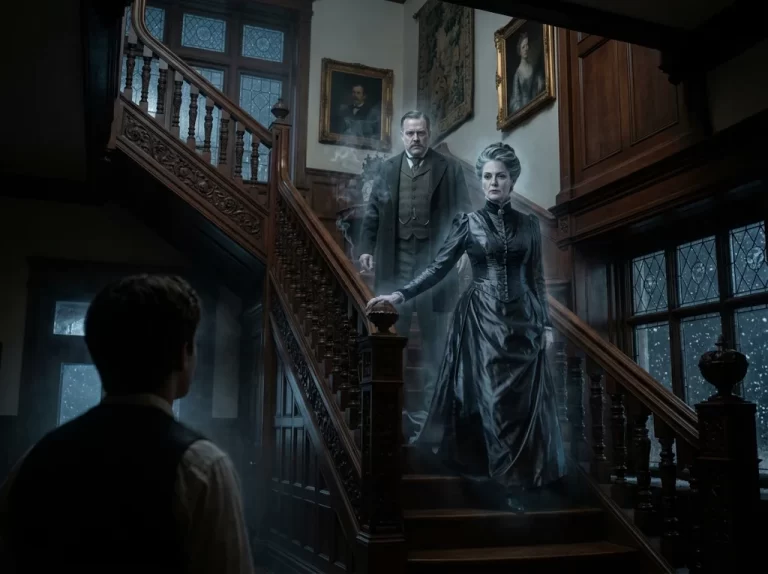
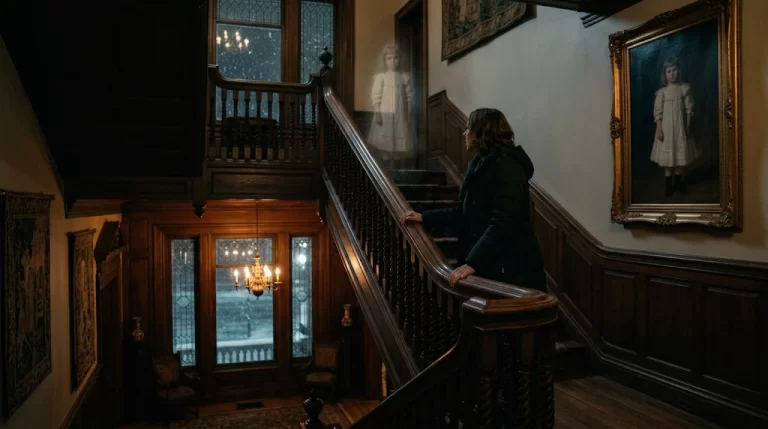
Mallory knew the mansion’s folklore—you didn’t last a month on staff without hearing it. Everyone traded stories about the young girl in a white dress who supposedly stepped out of a massive gilt-framed mirror to watch the living, her pale face occasionally spotted at the upper windows at dusk. And then there was the man in the black cape, a tall, silent figure glimpsed slipping through the attic corridors before vanishing straight into the plaster.
“I thought the ghosts here were quiet,” Mallory murmured, crossing her arms against a sudden chill.
“The girl and the caped man are,” Vern said, taking a slow sip from his thermos. “The music’s different. It’s the only legend in this house with a real paper trail.”
He nodded toward the parlor, and as they walked in, the melody seemed to stay just one room ahead of them—never loud, never quite close enough to pin down.
“People look at the murals and the imported wood and think of Alfred and Elizabeth McCune,” Vern said, his voice low. “They built this place to be the grandest home in Utah and threw parties that rattled the whole valley. But they didn’t stay forever. In 1920, they gifted the mansion to the Church, and that’s when the house changed its character.”
For nearly four decades, the estate wasn’t a private home at all. It operated as the McCune School of Music and Art.
“Think about that,” Vern said, gesturing toward the shadowed alcoves. “From 1920 until 1957, these rooms weren’t quiet for a single day. Hundreds of students, year after year, pouring everything they had into these walls. Pianos in the parlors, violins in the bedrooms, cellos echoing down the halls. Scales practiced until fingers went numb. Recitals where kids played like their whole future hung on the next bar.”
“So what we’re hearing is just… leftover noise?” Mallory asked.
“That’s how the story started,” Vern nodded. “When the conservatory shut down in ’57, they hauled out the practice pianos, boxed up the sheet music, and bolted the front doors. For the first time in thirty-seven years, the building went dead silent. Or it was supposed to.”
That first winter after the school closed, a night watchman making his rounds in December heard a Chopin nocturne drifting down from the empty ballroom. Figuring vandals had pried open a window, he called the police. Officers swept the mansion from the coal cellar to the attic. Every latch was locked from the inside. The fresh snow along the perimeter didn’t have a single boot print. And there wasn’t a musical instrument left anywhere in the building.
“It never really stopped after that,” Vern said. “When the place became a college center, students cramming late swore they heard strings tuning up in the empty hallways. Once it opened for weddings and tours, caterers and brides started hearing it after the bands packed up. Some folks say it’s a former student who never got to finish her recital. Me? I think wood this old acts like the body of a violin—soaks up enough music over forty years, and on a cold night, it lets a little back out.”
Upstairs, the violin held one last, trembling note. The piano answered with a soft, resolving chord that lingered in the rafters, making the crystal drops on the chandeliers hum barely loud enough to hear.
Then the quiet rushed back in.
Mallory let out a breath she hadn’t realized she was holding. The tight, electric chill in the foyer eased. She glanced up at the third-floor landing, half-expecting to catch the pale hem of a white dress or the sweep of a dark cape, but there was only the dull sheen of polished oak.
“You ever recognize what they’re playing?” she asked softly.
Vern tucked his thermos under his arm and headed for the heavy front doors to throw the deadbolt. “Nope,” he said over his shoulder. “Never the same piece twice. Guess they’re still practicing.”