- Stories at this place
- 3
- Filed as
 Hawaiian Folklore
Story 1162
The Wrath of Kamapuaʻa
Field log · Story 1162
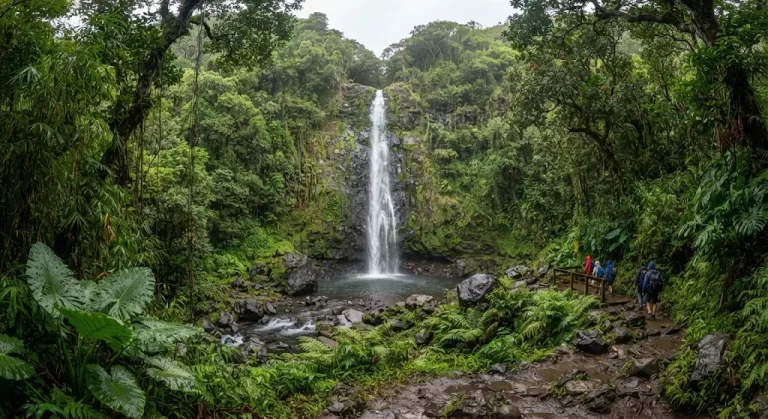
The wind through the Nuʻuanu Pali is never just wind. On the high, sheer-dropped saddle connecting Honolulu to Windward Oʻahu, the gale does not merely blow—it howls, tests your footing, and carries the weight of a thousand historical ghosts.
Drive across the Pali Highway today, and the modern asphalt smooths out the journey. But beneath the concrete and the blinding green of the koa and fern forests lies an ancient, ironclad law of the mountain: You never, under any circumstances, transport pork over the Pali.
The Origin of the Taboo: The Wrath of Kamapuaʻa
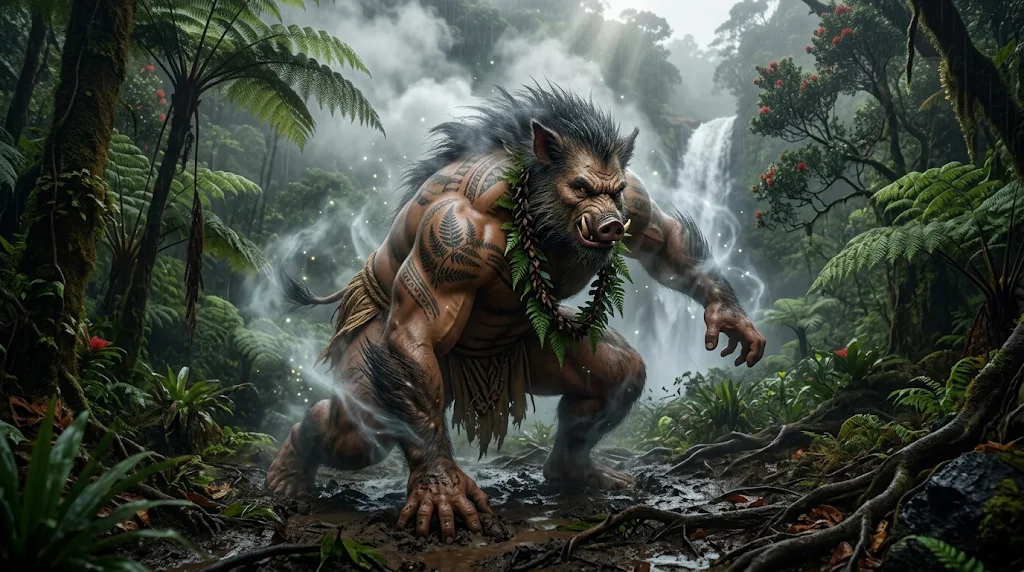
The roots of the taboo trace directly back to the fierce demigod Kamapuaʻa, the shape-shifting hog-man whose legendary battles with Pele shook the islands.
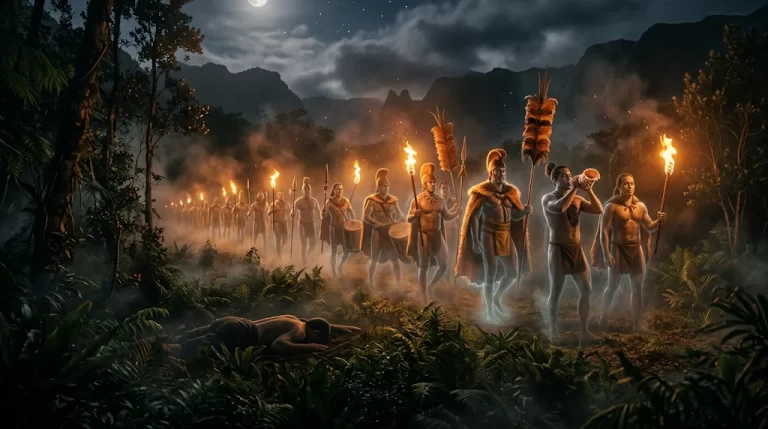
According to Hawaiian tradition, Kamapuaʻa’s familial and spiritual ties run deep through the Koʻolau range, particularly the windward valleys. When the great Oʻahu chief Kualiʻi and later Kamehameha I fought for control of the islands—culminating in the horrific, decisive Battle of Nuʻuanu in 1795—the sacred geography of the Pali was stained with blood.
Because Kamapuaʻa is intimately connected to the pig (his physical manifestation and kin), carrying pork—especially raw pig meat—over his sacred domain is viewed as a direct insult to the demigod and the ancestral guardians of the ridge. To transport pork across the Pali is to invite the wrath of the mountain’s spirits, signaling a profound disrespect for the indigenous forces that claim dominion over the pass.
Modern Folklore: The Ghostly Hitchhiker of the Pali
For generations, locals have passed down strict warnings about this superstition, bolstered by terrifying modern encounters. The most famous legend surrounding the pork taboo involves a motorist driving pau hana (after work) from Honolulu toward Kāneʻohe.
As the story is told across Oʻahu, a driver stops to pick up food—often cited as a package of raw pork or a foil-lined tray of kalua pig for a family gathering on the windward side—and takes the shortcut up the Pali Highway.
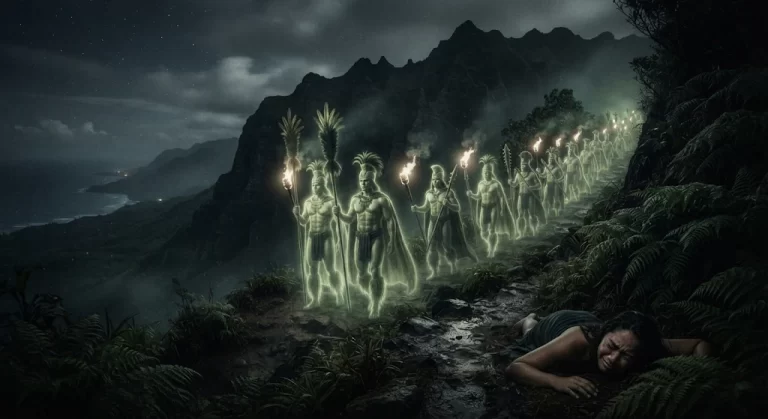
As they climb higher into the mist and the dense, dripping canopy, the temperature drops sharply. Rounding a tight, unlit curve near the historic lookout, the driver notices a lone figure standing by the guardrail, thumbing for a ride despite the howling wind and absolute isolation. Against better judgment, the driver pulls over.
The hitchhiker—often described as a pale woman in a damp white dress or a heavy-set figure wrapped in a traditional kapa cloak—opens the door and steps into the car. As the vehicle pulls back onto the road, an unnatural, freezing silence fills the cabin, drowning out even the radio.
Before the driver can ask a question, a low, rasping voice cuts through the chill: “He ʻiʻo puaʻa kāu”.
The driver’s stomach drops. You have pig meat with you.
Panicked, the driver glances in the rearview mirror or looks over at the passenger seat, only to find the hitchhiker’s eyes glowing with an ancient, fiery malice. Sensing the taboo has been broken within the sacred domain of the ridge, the spirit vanishes instantly into thin air—or worse, causes the car’s engine to die completely, leaving the terrified motorist stranded in the pitch-black mountain mist, hearing the heavy, grunting footfalls of an unseen beast pacing just beyond the headlights.
Surviving the Mountain
To this day, older generations of kamaʻāina (local residents) will strictly check their groceries before heading over the Pali. If someone must transport pork between Honolulu and Kāneʻohe, the unwritten rule is absolute: take the H-3 Freeway or go around the island via the North Shore.
Never cross the razor-thin ridge of Nuʻuanu with the meat of the hog. For on the Pali, the old gods are always watching, and the wind remembers every slight.