- Stories at this place
- 9
- Filed as
 Hotel
Story 1123
Room 111 – Exorcist
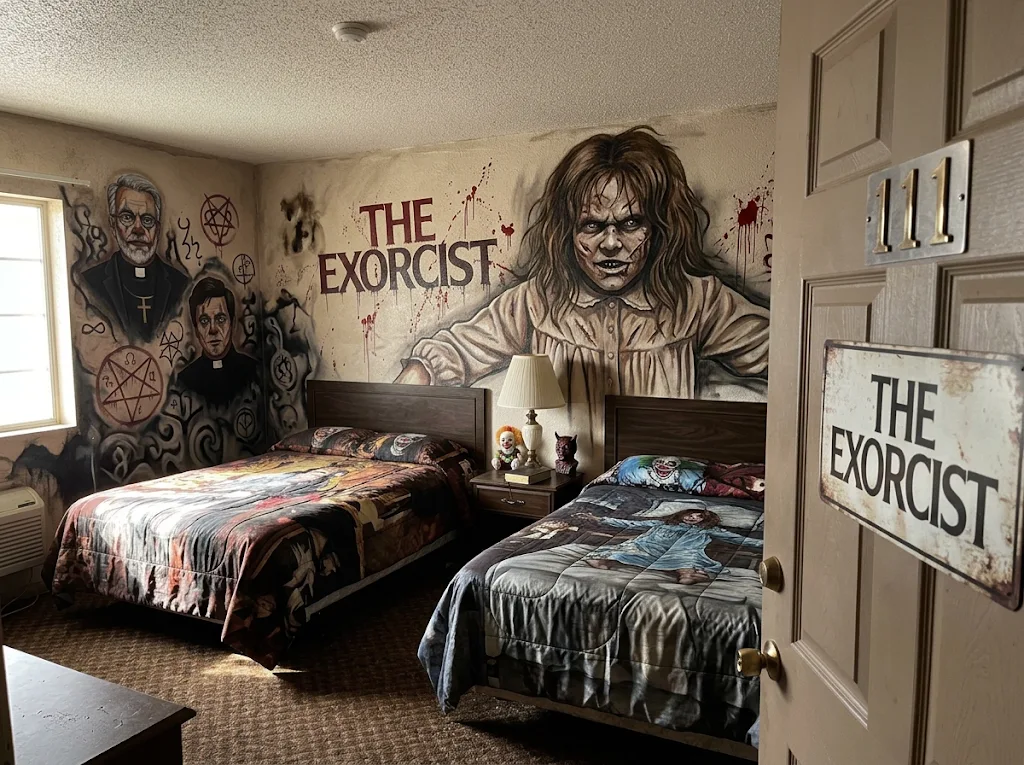
The highway out of Tonopah always feels like it’s leading you to the edge of the world. By the time you drop down US-95 and see the cluster of rusted mining headframes standing like skeletal monuments against the Nevada dust, the sun is usually bleeding out in shades of bruised purple and copper.
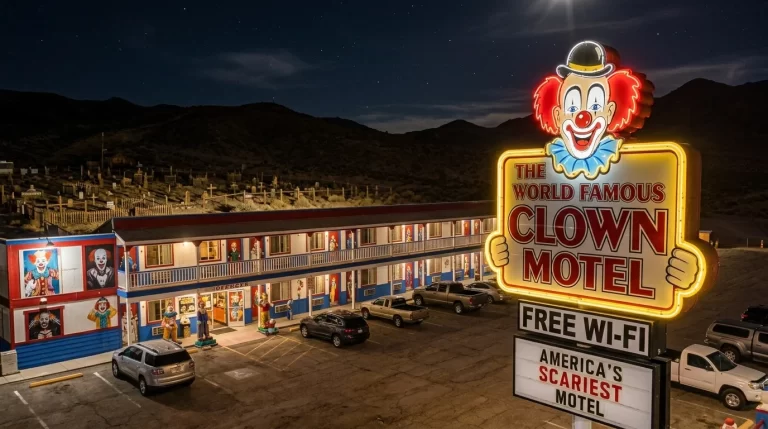
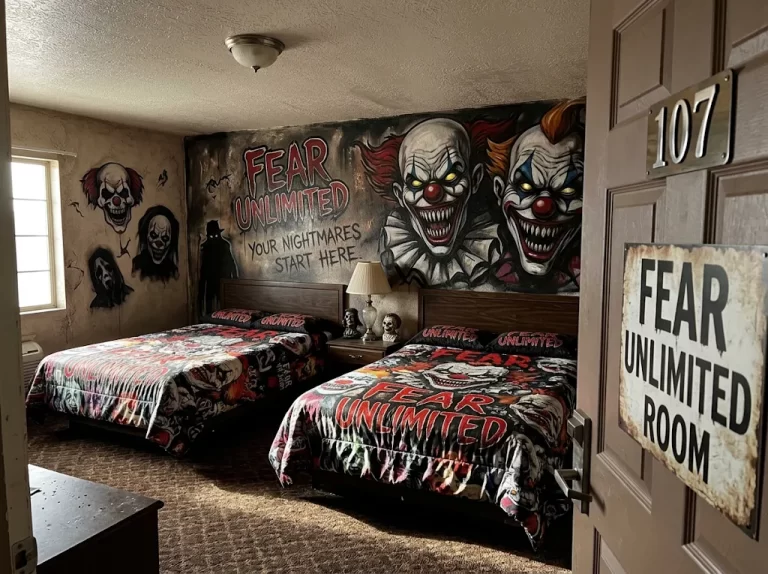
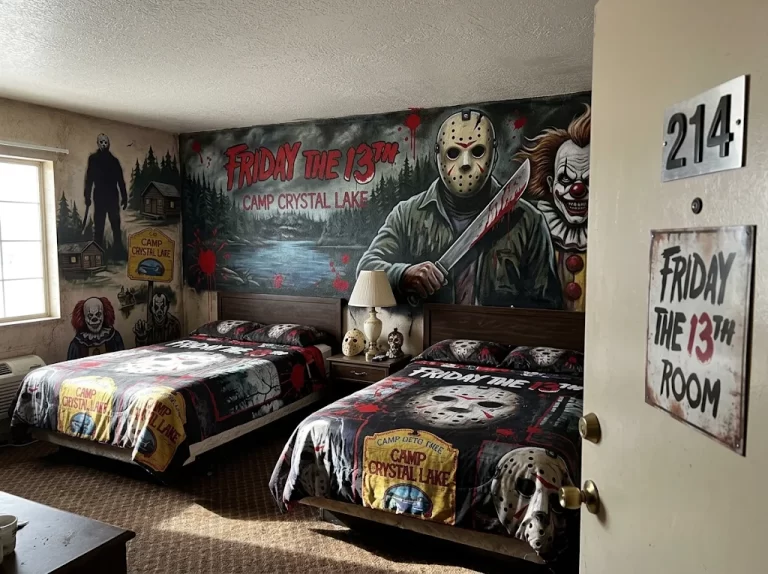
For decades, travelers pulled into the Clown Hotel not just for the novelty of a thousand porcelain and plastic grins staring down from every hallway, but because the desert air carries an unmistakable gravity. And if you ask anyone who works the front desk, or any paranormal investigator who has lugged an EMF meter across the threshold, that gravity pools heaviest in one specific corner of the building: Room 111, universally known as The Exorcist Suite.
The History Behind the Door
Long before the hotel became a Mecca for thrill-seekers and ghost hunters, the land it sat on was inextricably tied to the subterranean tragedies of the Tonopah mining boom. In 1901, Jim Butler struck silver in the harsh desert hills, and overnight, a lawless tent city exploded into a bustling, violent metropolis. Men descended thousands of feet into the earth on creaking wooden elevators, breathing silica dust and chasing a fortune that often turned to ash.
Tragedy was a daily ledger entry in Tonopah. In 1911, the infamous Belmont Mine fire claimed the lives of seventeen miners, suffocating them in the dark tunnels beneath the town. The local cemeteries filled faster than the saloons, and the dead were buried just a stone’s throw from where the Clown Hotel now stands.
The building itself—constructed originally as the Mizpah Belmont Hotel—housed the miners, drifters, and grieving families of an era defined by sudden, brutal loss. Over the decades, the structure transitioned into a motel, inheriting not just the physical dust of the mining camp, but the residual weight of a community built on backbreaking labor and sudden catastrophe.
When the Clown Hotel opened its doors next to the historic Old Cemetery, Room 111 quickly earned a reputation that transcended typical motel ghost stories. Named “The Exorcist Suite” after repeated incidents where visitors and paranormal teams reported severe oppressive energy, scratching walls, and unexplainable physical phenomena, the room became a lightning rod for the unexplained. Investigators often note that anomalous equipment spikes in 111 coincide with the lowest barometric pressure drops of the desert night—as if the room itself is breathing.
A Night in Room 111
Leo adjusted his collar, shivering slightly despite the dry, ambient heat humming from the old wall unit. He had booked Room 111 not out of a desire for a cheap thrill, but because he was chasing the quiet of the Great Basin—and perhaps because history had a way of pulling at him.
The room was sparse, dominated by a heavy wooden headboard and flanked by the inescapable presence of the hotel outside. But inside 111, the laughter and jingles of the clown figurines in the lobby felt a million miles away. Here, the silence was heavy, thick with the scent of old carpet, desert alkali, and something faintly metallic, like copper left out in the rain.
At 1:15 AM, the temperature dropped precipitously.
Leo woke instantly, his heart hammering against his ribs. The wall unit had stopped humming. In the absolute, pitch-black dark of the Nevada desert night—where no streetlights penetrate the valley floor—the shadows seemed to shift with a deliberate, viscous intent.
Then came the sound.
It wasn’t a thump from the hallway, nor the settling groan of an old building fighting the desert wind. It was a rhythmic, scraping sound coming from inside the lath-and-plaster wall directly behind the headboard—the wall shared with the dark expanse of the historic cemetery just outside.
Scratch. Tap. Scratch.
Leo sat up, reaching blindly for his phone on the nightstand to use the flashlight. As the beam cut through the dark, illuminating dust motes dancing in the cold air, the scraping stopped. But the air pressure in the room shifted so violently that his ears popped, mimicking the rapid descent of a mining cage plunging into the dark earth of a Tonopah shaft.
He stared at the wall. Faintly, through the cheap drywall, he heard it: a low, muffled murmur, like a voice speaking from deep underground, asking a question in an era long forgotten.
He didn’t sleep the rest of the night. He sat in the chair by the window, watching the first pale streaks of dawn bleed over the rusted headframes across the highway.
People come to Room 111 looking for monsters or Hollywood-style haunts, but those who spend a night wrapped in its history realize something more profound. The room doesn’t feel evil; it simply remembers. It holds the echoes of men who went down into the dark and never quite found their way back to the surface, tethered forever to the desert floor where the wind never stops blowing.